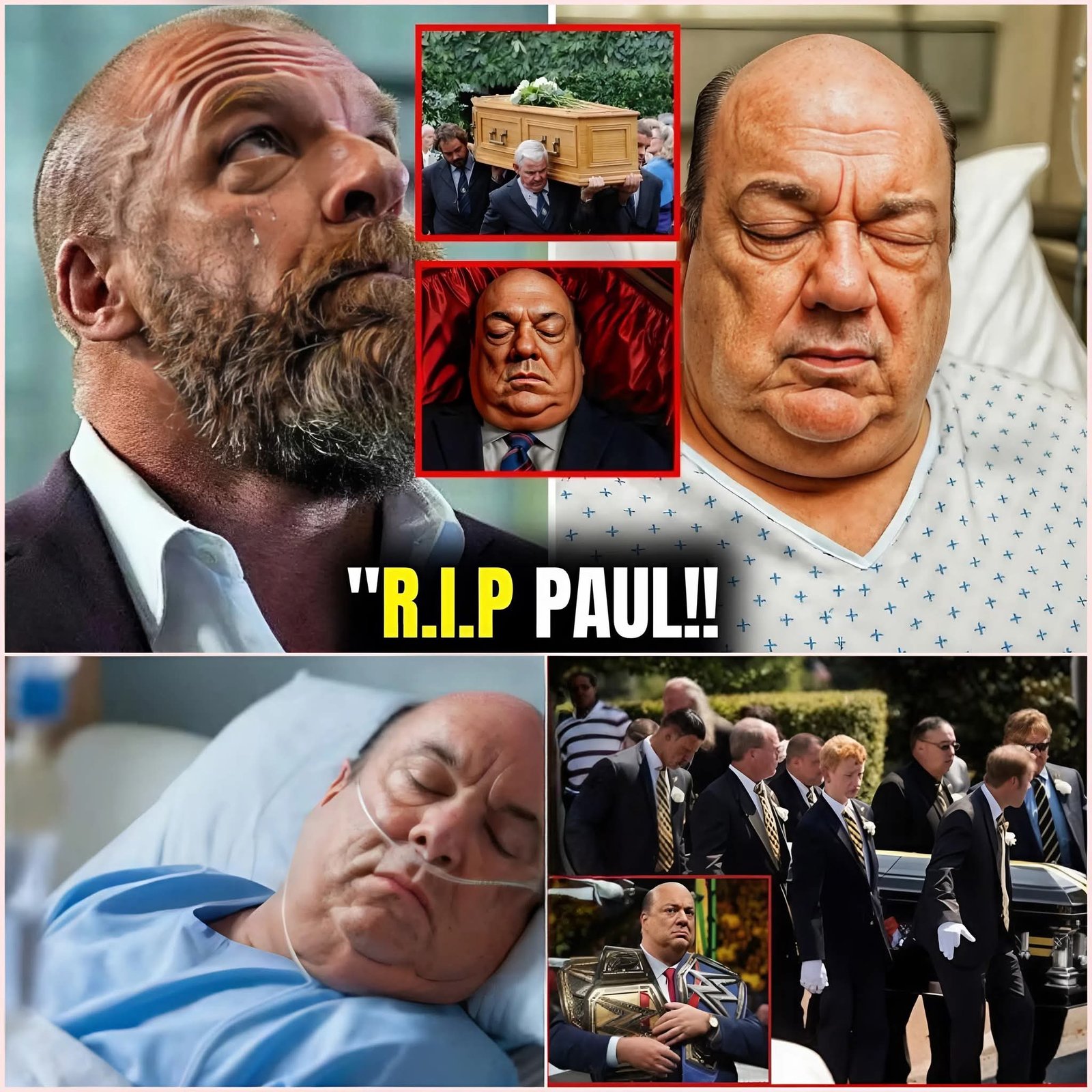
The wrestling world was left stunned earlier this week with the shocking news of Paul Heyman’s sudden passing. Widely regarded as one of the greatest minds in the history of sports entertainment, Heyman’s influence stretched across decades, shaping stars, redefining storytelling, and leaving behind a legacy unlike any other. While fans and performers alike poured their hearts out with messages of grief and respect, one particular reaction raised eyebrows—Triple H’s emotional response.
On the surface, it seemed like a touching tribute. Standing in front of cameras, the Chief Content Officer of WWE paused, lowered his head, and let out what appeared to be choked-back sobs. He spoke of Heyman’s “immeasurable contributions” and called him “family.” Clips of the moment spread quickly online. Yet, among the sea of condolences, many fans weren’t buying it. Social media lit up with claims that Hunter’s emotions looked more staged than sincere.
For years, rumors have persisted about behind-the-scenes tension between Triple H and Heyman. While Heyman’s creativity was undeniable, his clashes with authority figures—especially during his runs as an executive in WWE—were legendary. According to insiders, the two had a strained relationship, especially regarding talent direction and creative control. Heyman fought for edgier, riskier storytelling, while Triple H leaned toward a more polished, corporate vision. Though they worked together professionally, it’s no secret that their philosophies often clashed.
This is why some fans are calling Triple H’s teary-eyed reaction “a performance.” One fan tweeted, “Hunter crying over Heyman is like Vince crying over Ted Turner—it just doesn’t add up.” Another wrote, “He looked more worried about PR than actually losing Heyman.”
Adding fuel to the fire, several former WWE personalities hinted at the same sentiment. An ex-ECW star, speaking anonymously, told reporters, “Paul and Hunter weren’t best friends. Don’t let anyone twist that. What you saw was for the cameras.”
But others argue that even if tension existed, the gravity of Heyman’s passing could cut through personal differences. After all, wrestling has always been a strange mix of real-life rivalries and shared respect. Many point out that even if Hunter and Heyman weren’t close, they were part of the same history—one that defined an era. Triple H, as a leader, may have felt compelled to put on a strong, heartfelt front for the WWE Universe, even if his true emotions were complicated.
Whether his reaction was genuine or a carefully crafted display, the discussion around it shows just how powerful Heyman’s presence was. Even in death, he continues to stir debate, just as he did throughout his career. Fans might question Triple H’s sincerity, but no one questions the impact of Paul Heyman. Love him or hate him, he was a revolutionary voice in wrestling—a man whose influence will echo long after the last bell has rung.
In the end, maybe Triple H’s “fake emotions” don’t matter. What matters is that the industry lost a titan, and the void left behind will never truly be filled.